How to Prepare for Abitur Physik: Fields, Waves and Quantum Physics
Physics joined the shared German task pool late. The IQB has run ländergemeinsame Abituraufgabenpools for German, mathematics, English and French since the 2017 exam year. For biology, chemistry and physics, pools have only been available since the 2025 exam year.
That single fact shapes how you prepare. The pool is not the exam. Each Land submits task proposals, working groups develop them into pool tasks, and then each Land may use those tasks for its own Abitur. Your paper is still a Bundesland paper, written and marked under your Land's rules. What the pool changes is that the physics being asked for across the Länder is converging, so practising the shared content fields is no longer guesswork.
Physics Zen's Abitur Physik path is independent exam-style practice for thirty of those skills. It is not official exam material, not an IQB pool task, and not affiliated with any ministry or examination office.
What the Exam Looks Like
Physics is a written Abitur subject taken at one of two requirement levels. Which paper you sit depends on whether you took physics at grundlegendes or erhöhtes Anforderungsniveau, and the difference is not only length: the raised level expects more modelling and more independent reasoning about the same content. Structure, working time and weighting are set by your Bundesland, so the authoritative document is your Land's own Vorgaben, not a national one.
Three things are true in every version of the paper worth planning around.
It is written as connected tasks, not isolated numbers. An Aufgabe builds: a situation, a model, a calculation, then a judgement about what the result means. A student who can produce a number but cannot say which model produced it loses the second half of every task.
Experiments and data evaluation carry real weight. Abitur physics tasks routinely hand you a measurement series, a graph or a described setup and ask you to evaluate it: fit a relationship, extract a gradient, account for a deviation, state what the data do and do not show. This is a skill, and it is trained in a laboratory and on real measurements, not in a problem generator.
Fields, oscillations and waves, and quantum physics are the core. Mechanics is assumed rather than examined for its own sake. It arrives inside a field problem, as the motion of a charge, or inside an oscillation.
What the Physics Zen Path Contains
Thirty skills, six units, in teaching order rather than in the order a textbook numbers its chapters.
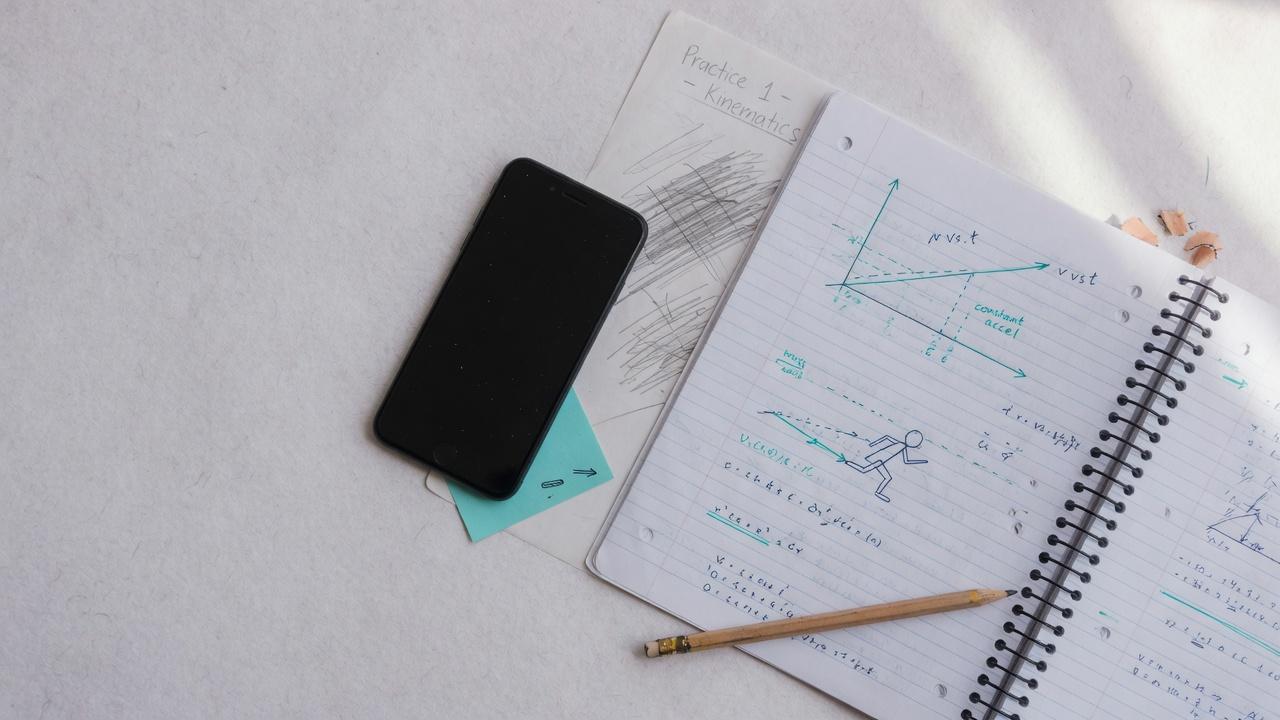
Mechanics foundations (10 skills). Kinematics, Newton's laws from Dynamics, work, kinetic and potential energy and conservation from Work & Energy, and uniform circular motion and centripetal force from Circular Motion & Gravitation. This block is the vocabulary. If splitting a projectile or writing a conservation statement still takes thought, fix it here rather than inside a field problem later.
Oscillations (3 skills). Spring and pendulum periods, and energy in SHM, from Simple Harmonic Motion.
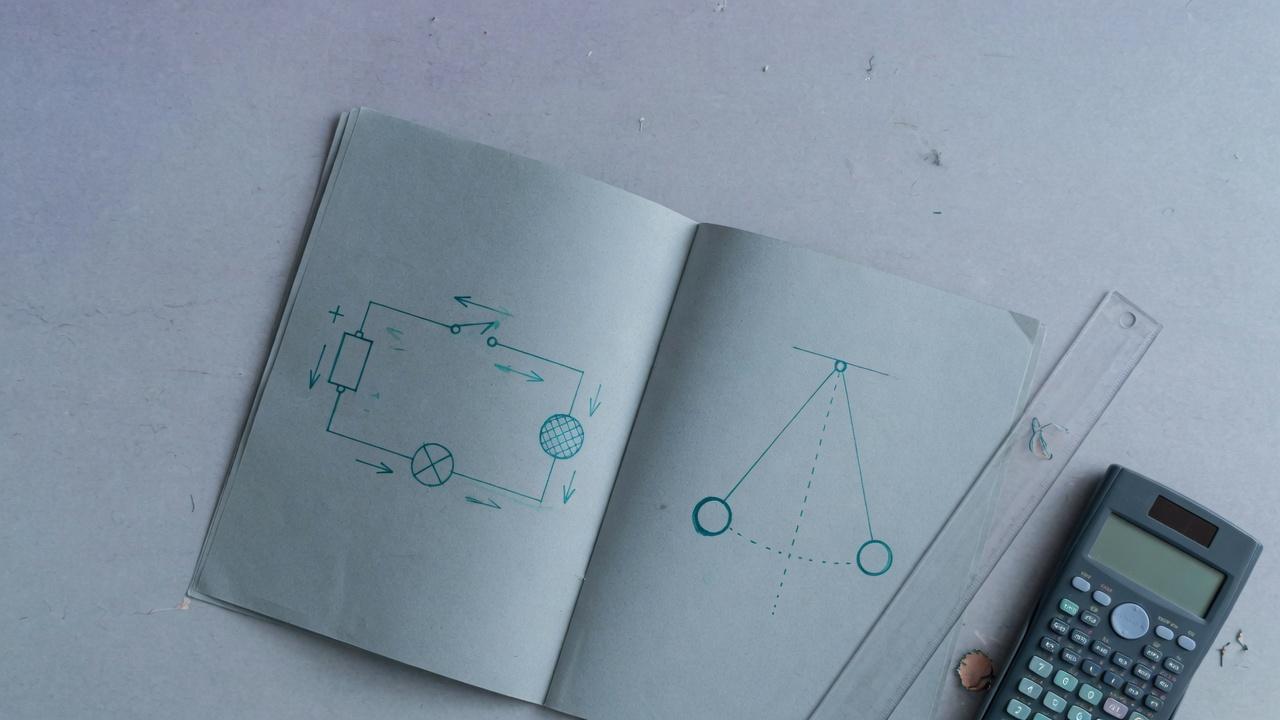
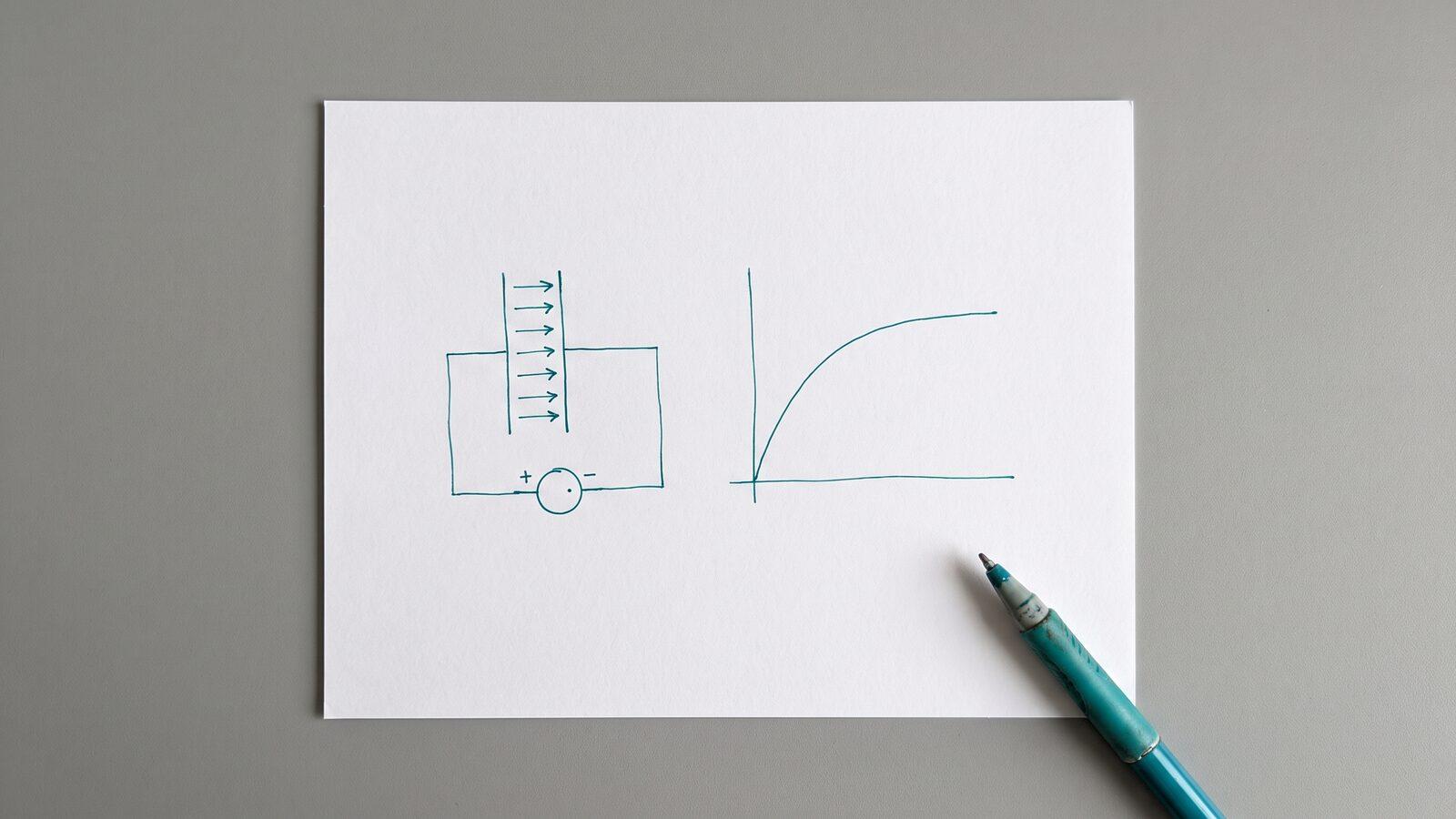
Fields (7 skills). Charge and Coulomb's law, electric field, electric potential from Electrostatics; capacitor charge and energy and RC transients from Capacitors & RC Circuits; magnetic force and Faraday induction from Magnetism & Induction. This is the biggest unit on the path, and the one the Abitur returns to most.
Circuits (3 skills). Ohm's law, series and parallel, electrical power, from Circuits. Small, and mostly there so that a field task involving a real circuit does not stall on arithmetic.
Waves and wave optics (5 skills). Wave basics and standing waves from Waves & Sound, refraction from Optics, and interference and diffraction from Wave Optics. The double slit and the grating are the Abitur's favourite way to make a wave argument quantitative.
Quantum physics (2 skills). Photon energy and the photoelectric effect, and atomic energy levels and transitions, from Quantum Physics.
Every skill on the path generates fresh values on each attempt, so a second run is a new problem rather than a recalled answer. Checking is instant, a full worked solution opens once you have attempted the item, and the theory for that skill, diagrams for circuits, fields and energy levels included, stays on the same screen instead of in a separate reference tab. Five mastery levels per skill decide when a concept is done with you, which is usually later than you would decide yourself. The path is Premium, with a free first lesson so you can see the format before paying, and the app runs on iPhone and Android.
What is not there matters as much. Relativity, thermodynamics and nuclear physics are outside this path. If your Land's Vorgaben name one of them as a Schwerpunkt this year, the path will not cover it and you should not pretend otherwise. There are no mock papers on the path either, and no marked experimental work.
Twelve Weeks with the Path
Twelve weeks of focused practice on top of lessons is enough to turn the standard task types into things you have already met. The howto above is the same sequence in short form.
Weeks 1 to 3: mechanics foundations. Ten skills, and the fastest part of the path if your Mittelstufe mechanics is sound. Do not skip it because it looks easy. Generated values mean you cannot recall yesterday's answer, which is the point.
Week 4: oscillations. Three skills, one week, and a good place to slow down. Period, frequency, amplitude and energy in SHM are the language the waves unit reuses.
Weeks 5 to 7: fields. The heart of the path. Take these three weeks seriously: electric field and potential, then the capacitor as a store of energy, then the RC transient, then magnetic force and induction. Induction in particular rewards being able to say in words what is changing before writing anything down.
Week 8: circuits. Short unit. Use it as recovery between fields and waves rather than as a week off.
Weeks 9 to 11: waves and wave optics. Wave speed, standing waves, refraction, then interference and diffraction. Closed and open pipes are different rules. A double slit and a grating are different formulas for the same idea, and mixing them is the commonest silent error here.
Week 12: quantum physics. Two skills, one week, no rush. The photoelectric effect and atomic transitions are conceptually the heaviest thing on the path and the most likely to appear as an argue-in-writing task.
Alongside the path, keep doing the two things the app cannot do for you: written-out solutions in full sentences, and real measurement evaluation from your own lessons.
Conventions That Matter
The path uses . That matches A-Level practice in the same app and differs from the AP Physics 1 path, which uses . Do not mix them in one sitting.
Type decimals with a point. Every German exercise book writes , and the answer field wants . This trips up more sessions than any physics misunderstanding, and it is worth building the habit early rather than fighting it during revision.
Units and prefixes are worth more attention than they get. Nanofarads, millitesla, kilovolts and electronvolts all appear in field and quantum tasks, and a converted-wrongly answer looks exactly like a misunderstood physics answer on a marked script.
Finally: the Abitur wants a named model. Which law, which assumption, which system. A correct number with no stated model is a partial answer, on the path and on the paper.
Abitur or A-Level?
They overlap heavily and are not interchangeable. The A-Level path in this app is the full in-app curriculum, including momentum, rotation, fluids, thermodynamics and nuclear physics, none of which are on the Abitur path. The Abitur path trades that breadth for concentration on the fields, oscillations and waves, and quantum content the German paper actually leans on, and it drops the rest.
If you are sitting a British or international A-Level, use the A-Level path and the A-Level guide. If you are sitting a German Abitur, the shorter path is the honest one, plus whatever your Land's Vorgaben add on top. Same solving loop, same , smaller and deeper map.
For the other half of the same exam week, Math Zen has a companion guide for the maths side. And if the problem is the studying rather than the content, start with how to study physics effectively, then come back to the path.
Common questions
- What does the Physics Zen Abitur Physik path cover?
- Thirty skills in six units: mechanics foundations, oscillations, fields, circuits, waves and wave optics, and quantum physics. It is focused practice on the content fields shared across the IQB task pool, not the full course of any single Bundesland.
- Is this a mock Abitur paper?
- No. It is focused skill practice, not a complete mock paper. There is no timed Aufgabenblock, no experimental write-up and no assessed data evaluation. Relativity, thermodynamics and nuclear physics sit outside this path.
- Is Physics Zen official Abitur material?
- No. Physics Zen is an independent practice tool and is not affiliated with the IQB, any ministry of education or any examination office. The problems are not IQB pool tasks and not past papers.
- Which value of g does the Abitur path use?
- g = 9.81 m/s². The A-Level path in this app uses the same value. The AP Physics 1 path uses 9.8 m/s², so do not mix sessions.
- Is the Abitur path free?
- The path is Premium, with a free first lesson so you can see the format before paying. The Kinematics topic is free end to end. Physics Zen runs on iPhone and Android.