How to Study Physics Effectively (The Solving Loop)
Physics goes wrong in a predictable way. You read a chapter, highlight the boxed equations, then freeze on the first problem that does not look like the example. The chapter was not useless. It was in the wrong place in the loop.
The loop that transfers is short. See a situation. Choose a model. Solve. Check. If you are stuck, open the theory beside the problem, not a different tab, and then return to the same item with a new attempt. Repeat with fresh numbers so the method is what you remember.
That is also how Physics Zen is built: generated problems, instant checking, worked solutions, and theory that stays in the session.
Stop Collecting Formulas
A formula is a compressed sentence about a model. says "displacement is velocity times time when velocity is constant." If you cannot say the sentence, the symbols will not help under pressure.
Write a one-line condition next to each relation you actually use. Constant velocity. Constant acceleration. Net force along a line. Closed system for momentum. No air resistance. The condition is the skill. The algebra is the follow-through.
Courses that hand you an equation sheet, including the current AP Physics 1 paper, make this even clearer. The sheet does not choose the model. You do.
Worked Solutions After You Have Tried
Reading a perfect solution first is how you get the feeling of understanding without the ability to start. Attempt the item. Submit an answer. Then open the worked solution and mark the first line where your path diverged.
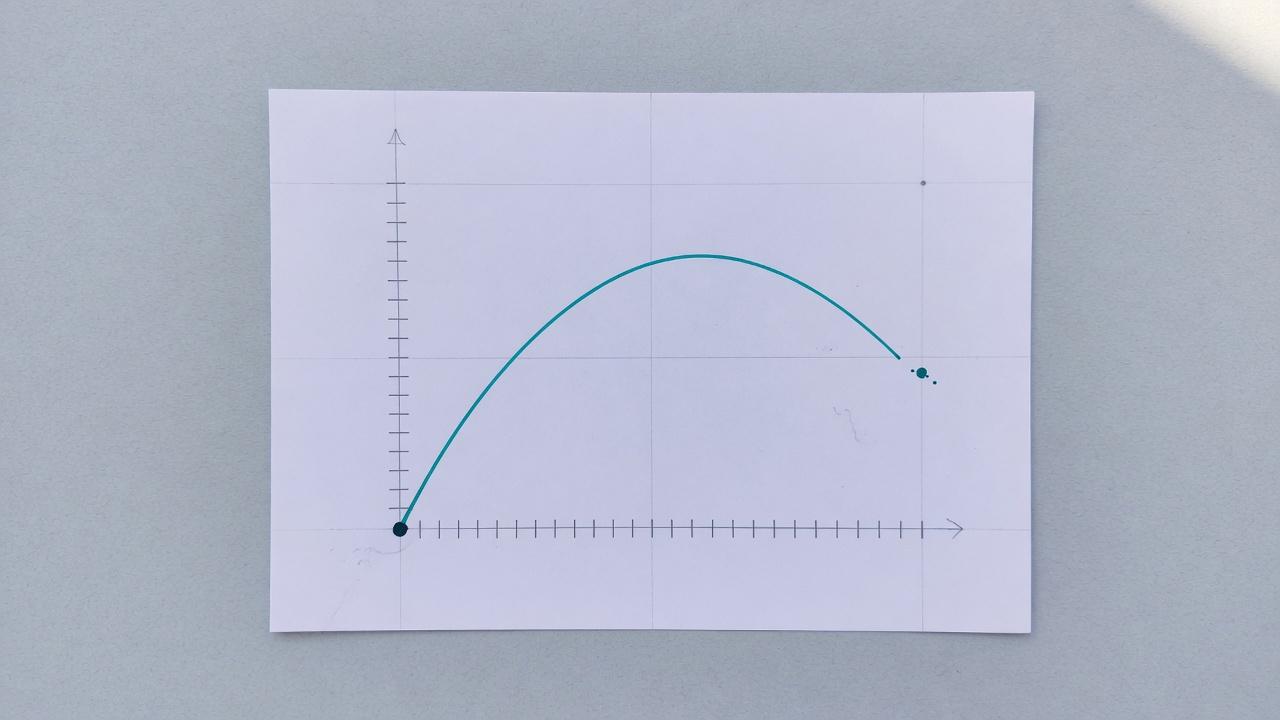
That mark is the lesson. Maybe you used a speed as a velocity. Maybe you treated a projectile as one-dimensional. Maybe had the wrong sign. The next generated item will not reuse the old numbers, so you cannot skate by on memory of the previous arithmetic.
Theory Beside the Problem, Not Instead of It
Definitions, diagrams and a short example should be one gesture away. Leaving the session to hunt a textbook chapter is how a five-minute snag becomes a twenty-minute detour, after which the original problem is cold.
Use theory to name the model, then close it. If you need the page open for the entire solution, you are copying, not solving. Come back to the same skill later and see whether the model still comes to mind without the card.
Five Levels, Not a Skip Button
Each skill in Physics Zen has five difficulty levels. Direct applications sit at the bottom. Multi-step combinations sit at the top. Correct work moves you up. Mistakes hold you on the current idea with new values.
That is slower than a playlist of "challenge problems," and it is the point. A lucky streak on easy items should not unlock a three-step energy-and-friction question you cannot yet set up. A mistake journal that stores the miss and offers the same concept again is more useful than a score that only goes up.
Draw Before You Compute
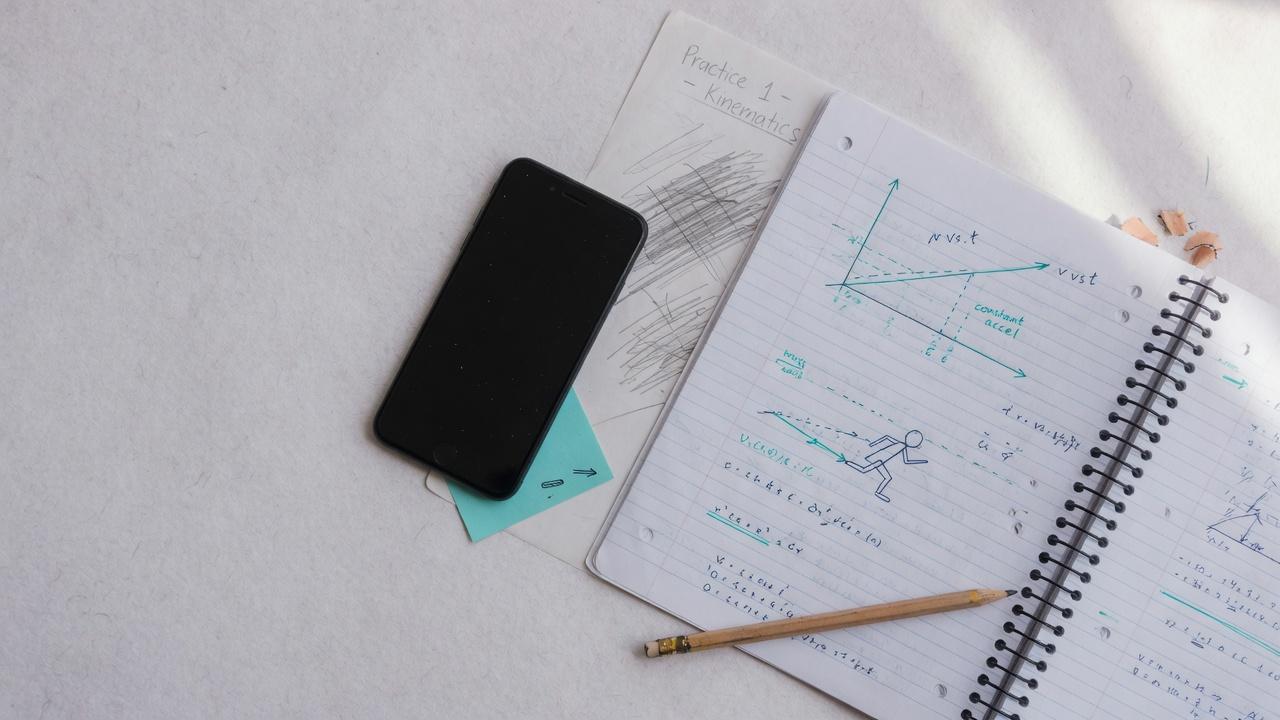
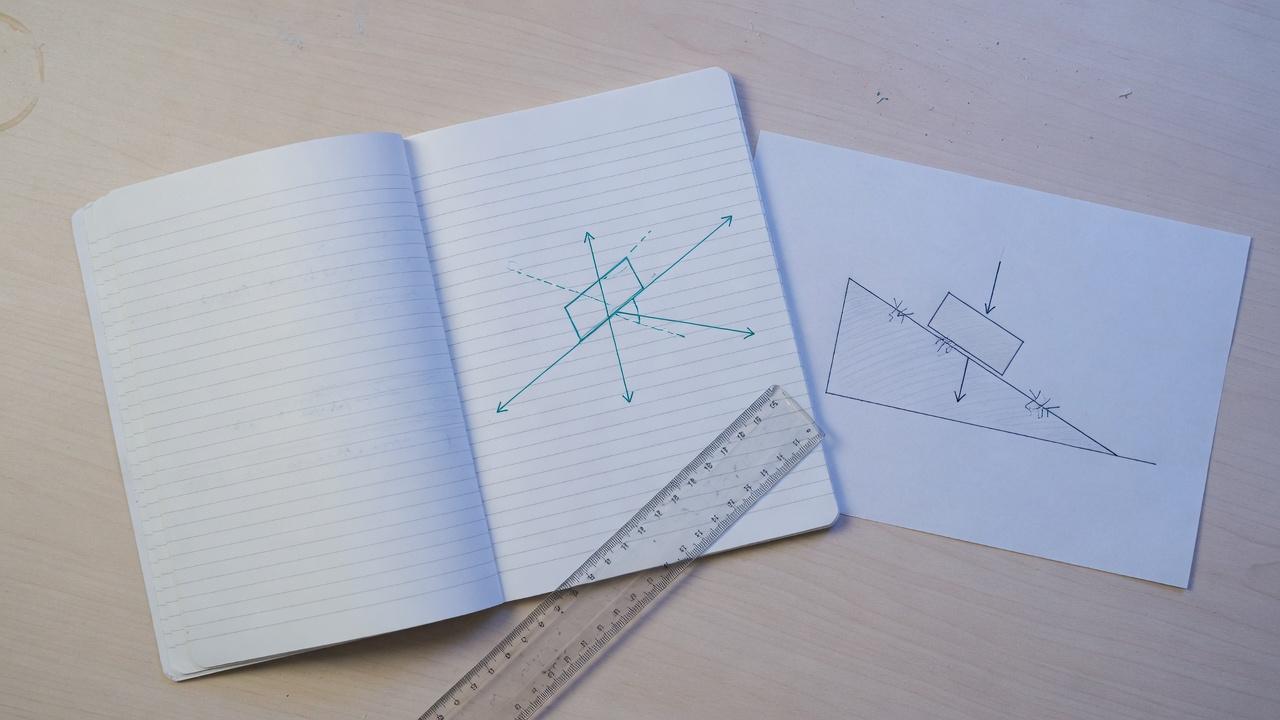
Force diagrams, circuit sketches, ray diagrams, v-t graphs: if the problem is about a picture, the picture is part of the solution. Exam-style free response awards the representation, not only the final number.
Draw the object. Mark the positive direction. Name the system. Then write the first equation. The extra thirty seconds are cheaper than a sign error that poisons every line below.
A Session You Can Repeat Tomorrow
Pick one skill, not five topics. Ten to twenty minutes. Generate, attempt, check, read the solution only after an attempt, and stop while you still know what you got wrong. Offline works: the generator lives on the device, so a commute or a library desk without wifi is still a session. Purchases and optional account sync are the only reasons to need a network.
Start on Kinematics if you want a complete free topic. If you are on the current AP course, follow the AP Physics 1 path after that. If you want the picture behind the first topic, read understanding kinematics intuitively.
The subject was never meant to be memorized as a wall. It was meant to be practised as a loop.
Common questions
- Should I memorize physics formulas?
- Memorize a short list of definitions, not a wall. Know what each symbol means and which situation the model belongs to. An equation sheet, when you have one, is a lookup for a model you already chose.
- How long should a physics practice session be?
- Long enough to finish a handful of items and review the misses the same day. Twenty focused minutes with checking beats an hour of watching solutions.
- Does Physics Zen work offline?
- Yes. Problems and solutions are generated on the device. Internet is only needed for purchases and optional account sync.
- What is mastery progression?
- Each skill has five difficulty levels. Correct work advances the level. Mistakes keep you on the current concept with fresh numbers, instead of skipping ahead on a lucky streak.