How to Prepare for AP Physics 1: A Study Plan for the Current Course
AP Physics 1 is a one-year, algebra-based mechanics course. After the Fall 2024 revision, first examined in May 2025, it is eight units. That is not a truncated version of "all of physics." It is the course as currently set: motion, forces, energy, momentum, rotation, oscillations and fluids.
Waves, sound, circuits, optics, heat and modern physics moved out. If your notes still have standing waves or Ohm's law sitting in an AP Physics 1 pile, those notes are for a different exam. Drill the eight units that are actually on this one.
Physics Zen's AP Physics 1 path is independent exam-style practice for those 28 skills. It is not official College Board material, and the app is not affiliated with College Board.
What the Current Exam Looks Like
The paper is two sections, each worth half the score.
- Section I. 40 multiple-choice questions, 80 minutes. Discrete items and short sets that share a stimulus.
- Section II. 4 free-response questions, 100 minutes. One of each type: mathematical routines; translation between representations; experimental design and analysis; qualitative/quantitative translation.
A calculator is allowed on both sections. An equation sheet is provided. That last fact is the opposite of some other AP science and math papers, and it changes how you study. You do not win by memorizing every form of . You win by recognizing which model the situation is, then finding the line on the sheet that belongs to it.
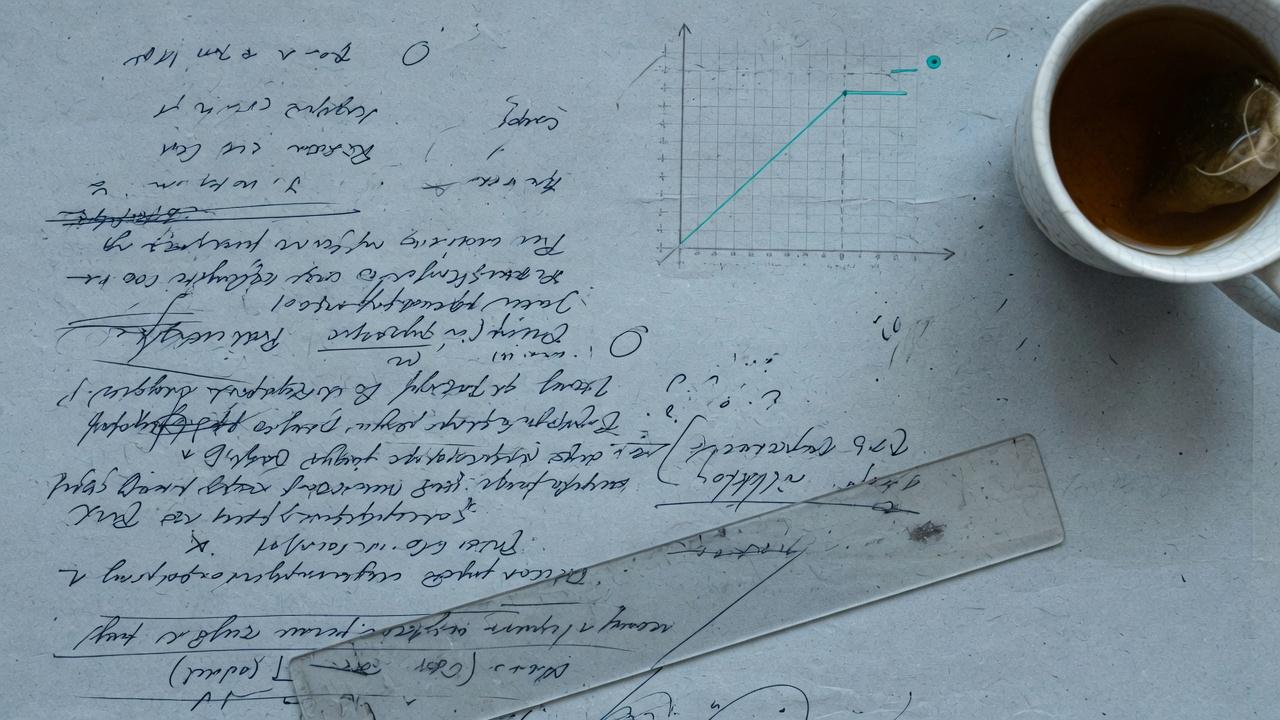
The free-response types are the real curriculum. "Translation between representations" means a graph, a diagram and an equation of the same motion. "Experimental design" means a procedure, uncertainties and a claim you can defend. Practising only numerical substitutions leaves those items untouched.
The Eight Units, in Teaching Order
College Board's unit numbering is not the only sensible order. Physics Zen teaches in this sequence, which is also the order of the in-app path. Circular motion sits with forces, even though the CED files it under Unit 2. Rotation is split across Units 5 and 6.
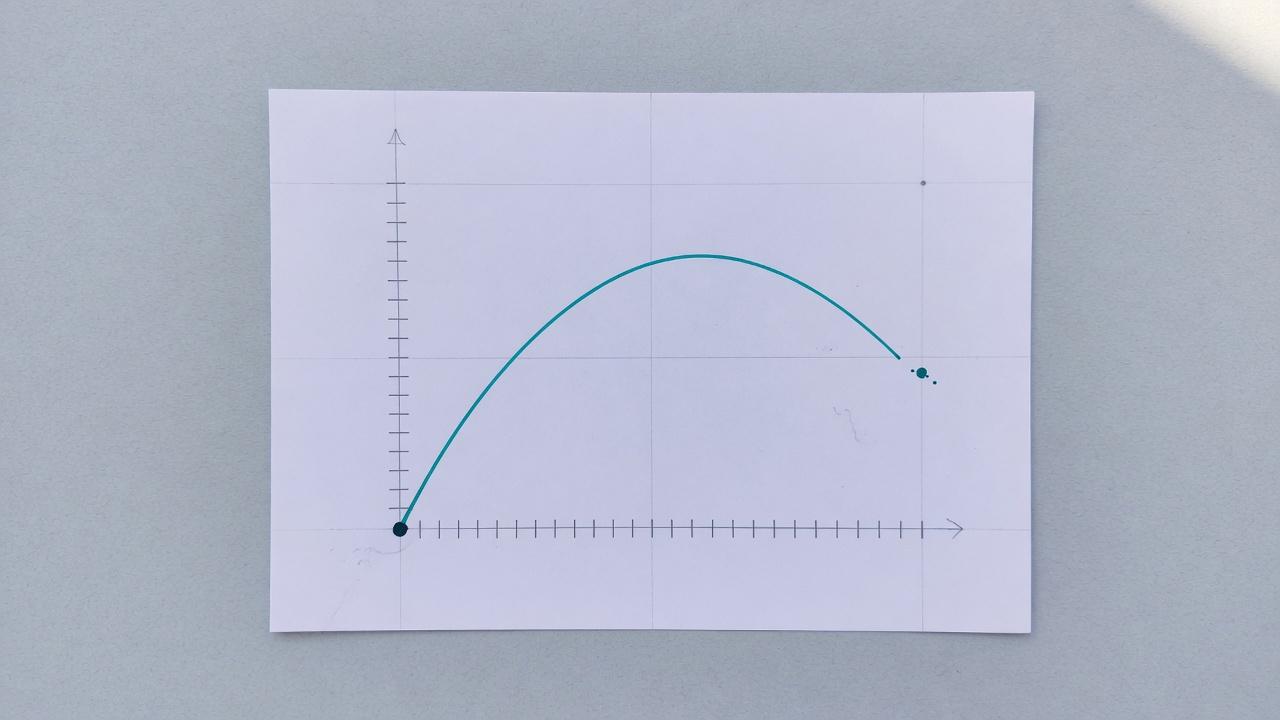
Kinematics. Describe motion. Uniform motion, constant acceleration, free fall, projectiles. If this is weak, everything else is translation without a dictionary. See understanding kinematics intuitively, then the projectile motion equations guide for full worked launches.
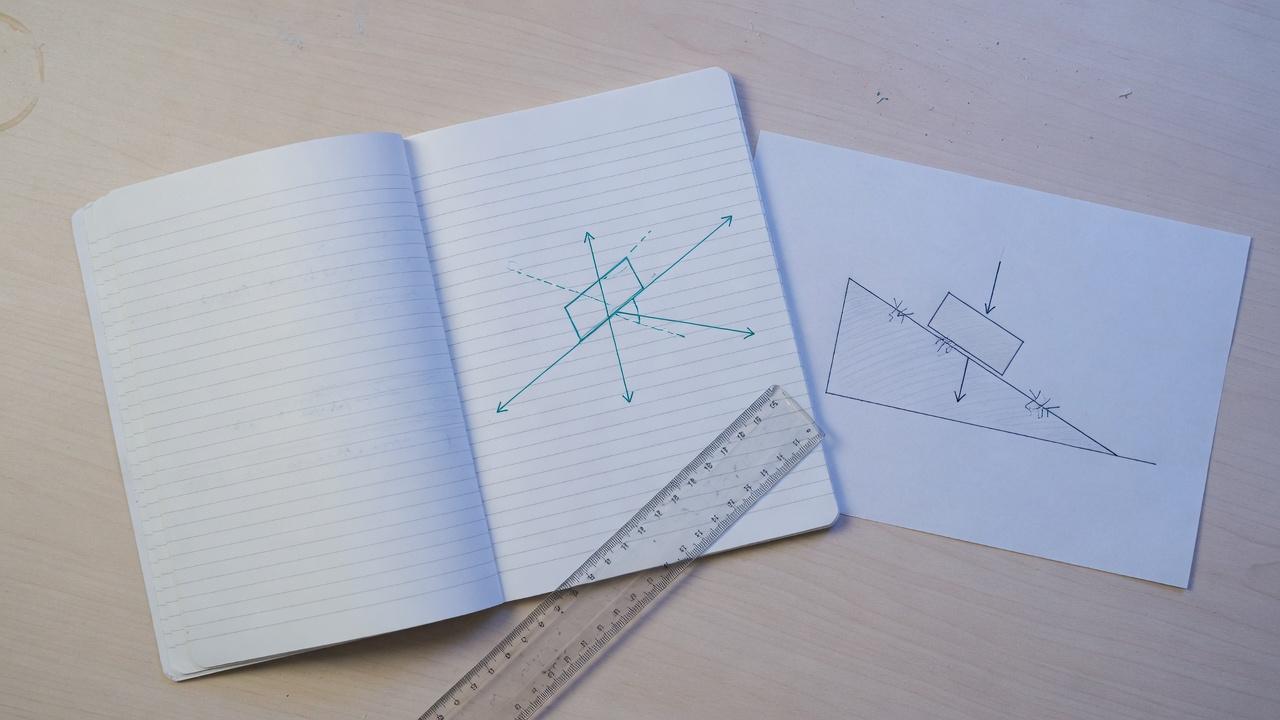
Force and translational dynamics. Newton's laws, friction, inclines, plus centripetal force and gravitation. This is a large multiple-choice share, roughly in the high teens to low twenties of percent.
Work, energy and power. Work at an angle, kinetic and potential energy, conservation with and without friction, power. Another large share.
Linear momentum. Impulse, one-dimensional conservation, elastic collisions and centre-of-mass calculations.
Rotation. Torque, rotational inertia, the rotational second law, rolling energy, angular momentum.
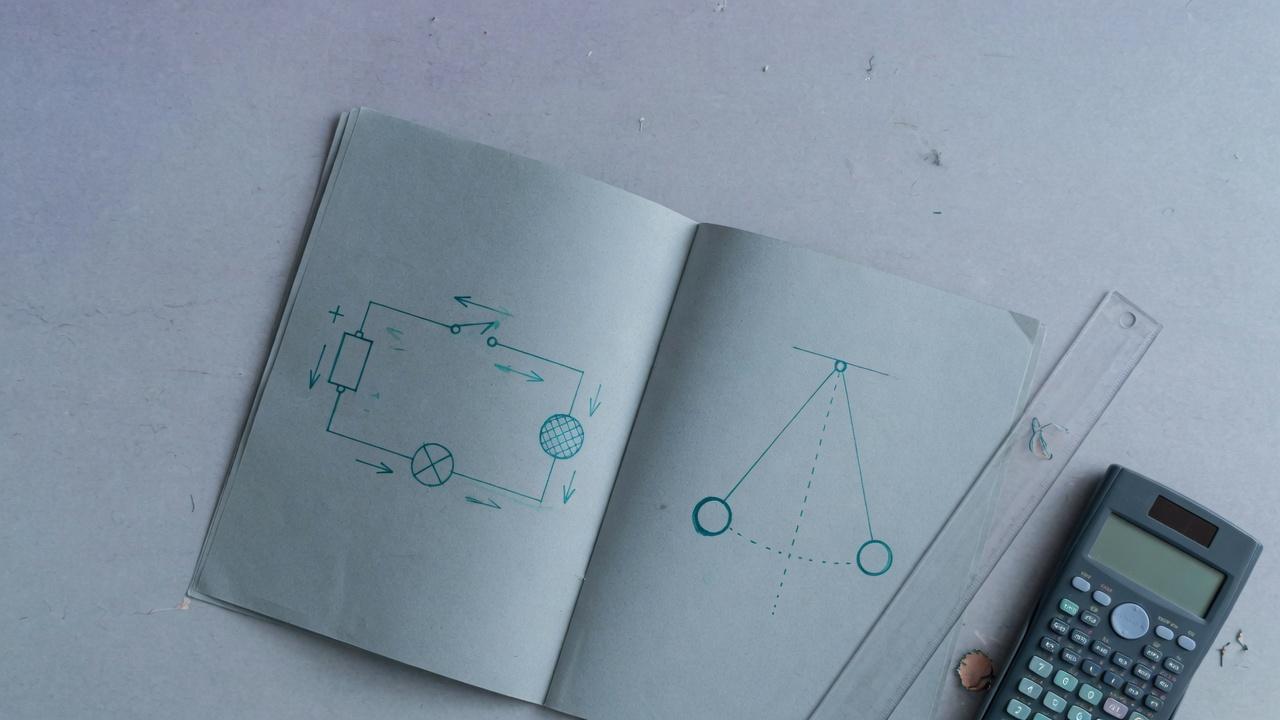
Oscillations. Springs, pendulums, energy in SHM.
Fluids. Density and pressure, buoyancy, continuity and Bernoulli. This unit is on AP Physics 1 now. Skipping it because an older review book never mentioned it is a quiet way to drop a tenth of the multiple-choice weighting.
Those 28 skills are the whole of the AP path. Electricity and waves are not missing. They are out of scope.
A Plan That Fits a School Year
Twelve weeks of focused practice, on top of class, is enough to make the exam feel like a format you have already met. Shorter is possible if kinematics and forces are already honest.
Weeks 1 to 2: kinematics. Generated problems, not a static worksheet. New numbers stop you from memorizing yesterday's answer. Instant checking and a worked solution after each item keep the loop tight.
Weeks 3 to 6: forces and energy. These two units do the heavy lifting on multiple choice. Inclines and energy-with-friction are where signs and diagrams go missing. Draw the forces. Name the system before you write .
Weeks 7 to 9: momentum, rotation, oscillations. Collisions that stick, rolling without slipping, and the period of a spring. Rotation is two CED units in one teaching topic. Give it more days than its page count suggests.
Week 10: fluids. Pressure at a depth, floating, a pipe that narrows. Short unit, easy to leave until it is too late.
Weeks 11 to 12: free-response types and timing. Write complete solutions. Label parts. Use the equation sheet as a lookup, not a substitute for choosing a model. Forty items in 80 minutes is two minutes each if you never pause, so skipping and returning is part of the skill.
Conventions Worth Fixing Early
AP-style practice in Physics Zen uses . A-Level practice uses . Mixing them mid-session is a needless source of "almost right" answers.
Diagrams matter on this paper. Force diagrams, graphs and the occasional fluid scene are not illustrations. They are the representation you are being asked to translate. If a problem needs a picture, draw it before the first equation.
What Independent Practice Can and Cannot Do
Generated problems with worked solutions will not replace a lab, and they will not be the official exam. They will keep you solving, checking and correcting on the actual eight-unit course, including fluids, with the gravity convention already set.
Start with Kinematics if that foundation is still cheap to repair. Then follow the AP Physics 1 path in order, and save timed free-response writing for the last two weeks.
Common questions
- What does AP Physics 1 cover after the Fall 2024 revision?
- Eight units of mechanics-focused physics. Kinematics; force and translational dynamics; work, energy and power; linear momentum; torque and rotational dynamics; energy and momentum of rotating systems; oscillations; and fluids. Electricity, waves, optics, thermodynamics and modern physics are not on this course.
- How is the AP Physics 1 exam structured?
- Two equally weighted sections. Section I is 40 multiple-choice questions in 80 minutes. Section II is 4 free-response questions in 100 minutes. A calculator is allowed on both sections, and an equation sheet is provided.
- Is Physics Zen official AP material?
- No. Physics Zen is an independent practice tool and is not affiliated with College Board. The in-app path is exam-style practice aligned to the current eight-unit course, not an official paper.
- Which value of g does the AP path use?
- Physics Zen uses g = 9.8 m/s² on the AP Physics 1 path. The A-Level path uses 9.81 m/s². Match the convention of the course you are practising.