How to Prepare for HKDSE Physics: A Plan for Paper 1 and Paper 2
HKDSE Physics is examined against a single document: the Physics Curriculum and Assessment Guide (S4-6), prepared jointly by the Curriculum Development Council and the Hong Kong Examinations and Assessment Authority (HKEAA). The 2027 assessment framework says so in its first line. Everything in this guide is built on those two documents, the HKEAA list of data, formulae and relationships, and the 2027 examination timetable.
That timetable puts Physics Paper 1 and Paper 2 on the morning of Wednesday 21 April 2027, with results expected around 14 July 2027. From late October that is about 25 weeks.
The Physics Zen HKDSE path is independent exam-style practice. It is not official material and is not affiliated with the HKEAA or the Education Bureau.
What the Exam Looks Like
Two papers and a school-based component. The weights below are from the 2027 framework.
| Component | What it contains | Weight | Time |
|---|---|---|---|
| Paper 1, Section A | Multiple-choice questions on the compulsory part | 21% | 2 h 30 min for the whole paper |
| Paper 1, Section B | Short questions, structured questions and an essay question | 39% | (same paper) |
| Paper 2 | Multiple-choice and structured questions on two of the four electives, 10% each | 20% | 1 h |
| School-based Assessment | Experiments in S5 and S6, plus an investigative study or an experiment with a detailed report | 20% | over two years |
All questions in Paper 1 are compulsory. Private candidates do not take the SBA, so their result rests entirely on the two papers.
Two consequences for revision. First, Section B is worth almost twice Section A, and it is written work: a correct number with no visible method is not what it rewards. Second, Paper 2 is short. One hour for two electives is roughly half an hour each, so an elective you know well but answer slowly costs marks.
The Chinese version matters too. In 2025, 12,560 candidates entered for Physics and 37.1% of those who sat it chose the Chinese version, according to the HKEAA results statistics. Revise in the language you will write in.
The Compulsory Part by Weight
The framework gives weights by paper and section, not by topic. The closest official signal of where the marks sit is the suggested lesson time in the curriculum guide: 184 hours for the compulsory part, split across five topics. The table uses those hours and adds what to drill for each topic in Physics Zen and what the path does not reach.
| Topic | Suggested hours | Share of 184 h | Drill on the path | Not on the path |
|---|---|---|---|---|
| I Heat and Gases | 23 | 12.5% | Specific Heat, Phase Changes, Gas Laws & Kinetic Theory | Conduction, convection and radiation; internal energy as kinetic plus potential energy of molecules |
| II Force and Motion | 50 | 27.2% | 19 skills: kinematics, Newton's laws and friction, work, energy and power, momentum and collisions, circular motion and gravitation, moments | General resolution of forces; the geostationary orbit from its period |
| III Wave Motion | 47 | 25.5% | Wave graphs and two-source interference, the EM spectrum, stationary waves, refraction and total internal reflection, lenses, double slit, grating | Sound: echoes and the decibel scale |
| IV Electricity and Magnetism | 48 | 26.1% | Coulomb's law and fields, resistance and circuits, e.m.f. and internal resistance, fields of a wire and a solenoid, magnetic force, induction, transformers and transmission | Fuses, earthing and the cost of domestic electricity |
| V Radioactivity and Nuclear Energy | 16 | 8.7% | Half-life and background, decay equations, mass-energy | Penetration and detection of alpha, beta and gamma; energy per fission or fusion event |
Lesson time is not a mark scheme, so treat the percentages as a planning guide, not a promise. They still tell you something useful: Force and Motion, Wave Motion and Electricity and Magnetism are each roughly a quarter of the compulsory teaching time, and Radioactivity is under a tenth.
What the Physics Zen Path Contains
Forty-four skills, in the app's teaching order rather than the guide's topic numbering.
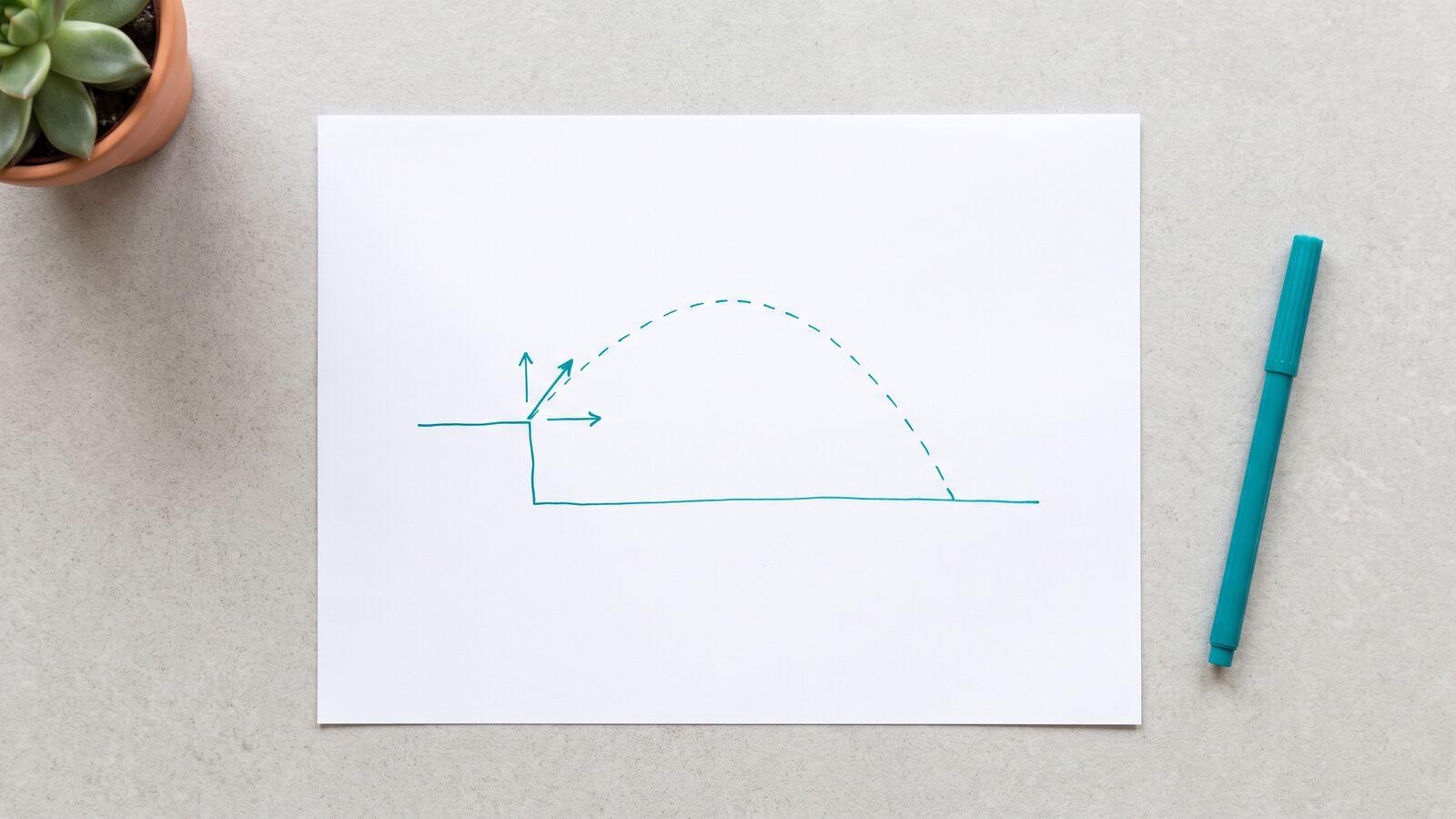
Force and Motion (19 skills). All of Kinematics, including launches at an angle, then Newton's laws, friction and the inclined plane, work, energy and power, momentum and impulse, collisions, circular motion and gravitation. Torque & Rotational Inertia is on the path for moments and equilibrium about a pivot; moment of inertia items are switched off on this path. If projectiles are where marks leak, the projectile motion worked examples split one launch step by step.
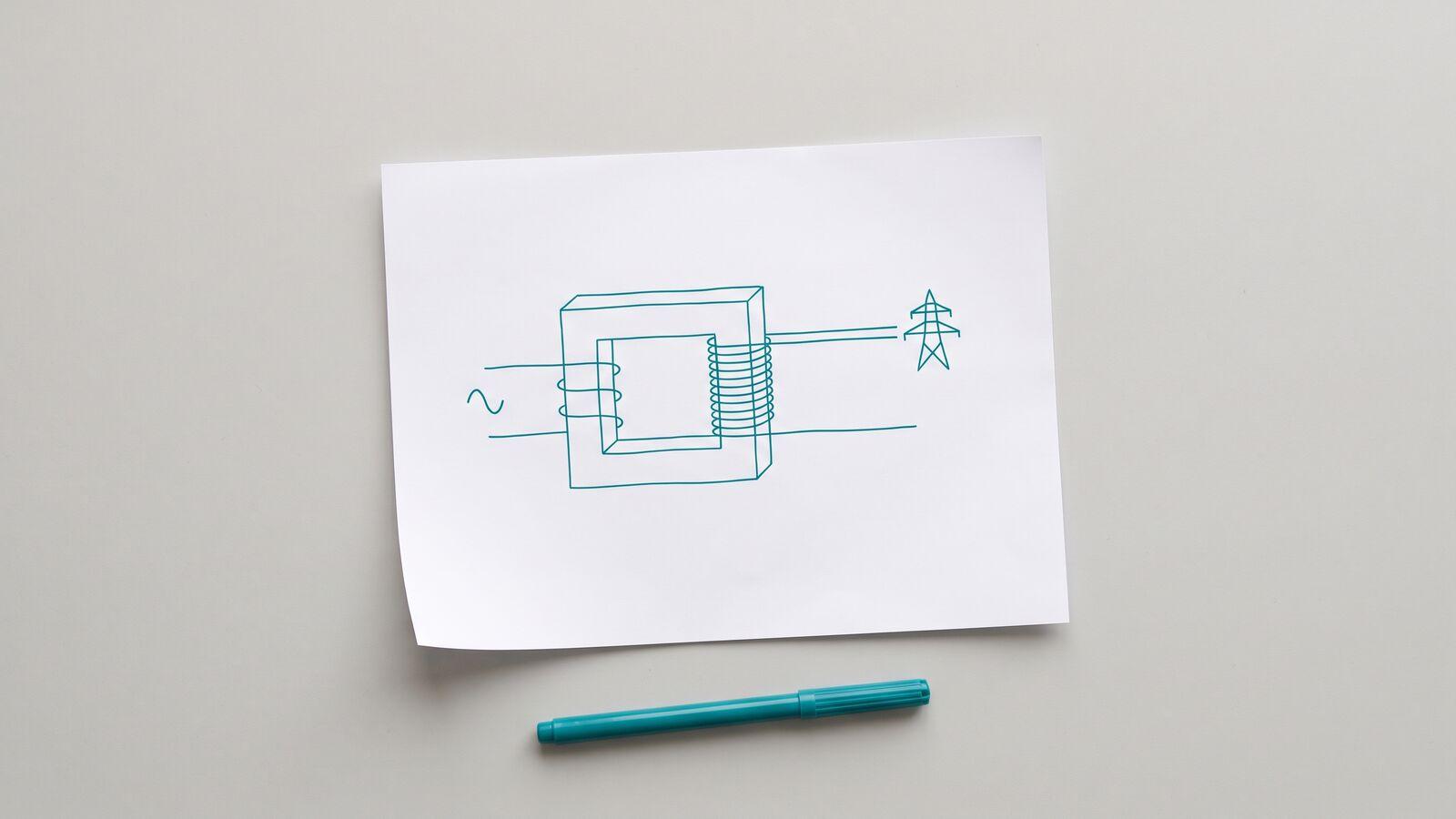
Electricity and Magnetism (9 skills). Charge and Coulomb's law, electric field including deflection between parallel plates, Ohm's law and resistance, series and parallel, electrical power, then Magnetism & Induction: the field of a long straight wire and a solenoid, force on a current and a moving charge, Faraday and Lenz, alternating current and transformers.
Wave Motion (8 skills). Wave speed and frequency, displacement-distance and displacement-time graphs with two-source interference, the electromagnetic spectrum, stationary waves, reflection and refraction, lenses, the double slit and the diffraction grating.
Heat and Gases (3 skills). Specific heat capacity, latent heat including the methods used in school experiments, and the general gas law with kinetic theory. The specific heat capacity guide works through heating, cooling and an insulated mixture.
Radioactivity and Nuclear Energy (2 skills). Radioactive decay, half-life and background count, and mass-energy.
Atomic World (3 skills). Photons and the photoelectric equation, energy levels of hydrogen and line spectra, and matter waves with the de Broglie wavelength.
On top of the general items, seven original HKDSE-style items mix in at the harder levels: a car crash with force from the rate of change of momentum, a wind turbine, latent heat measured in the lab, internal resistance, power transmission, background radiation and a stopping-potential problem. Values are generated fresh on every attempt, checking is instant, and a worked solution opens after you try. Theory with diagrams sits beside the problem, and five mastery levels per skill decide when a skill is done.
What It Does Not Cover
Be clear about the gaps before you plan around the path.
- Section B writing. Structured questions and the essay ask for explanations in sentences. The app checks answers, not prose. Write full solutions on paper.
- Statement-style multiple choice. The app asks for a value or one option, never which of several statements are correct. If your school papers use that format, practise it there.
- The topics in the last column of the table above, plus Rutherford scattering, the radius in the Bohr model and probing the nano scale in Atomic World.
- Paper 2 beyond Atomic World. Energy and Use of Energy has one item (the wind turbine). Astronomy and Space Science and Medical Physics are not served.
- The SBA. No app can run your experiments.
Two items on the path go slightly past the guide: open and closed pipes appear at the top levels of Standing Waves, and binding energy per nucleon at the top level of Mass-Energy. They do no harm, but they are not HKDSE content.
A 25-Week Plan to 21 April 2027
Weeks follow the topic weights above, with the heaviest topics first so they get the most repetition.
Weeks 1 to 5: Force and Motion. Nineteen skills. Kinematics and Newton's laws first, then energy and momentum, then circular motion and gravitation. Moments come last and are quick.
Weeks 6 to 9: Electricity and Magnetism. Fields and circuits first, then e.m.f. and internal resistance, then magnetic fields, induction and transformers. Keep a page of domestic electricity notes on the side.
Weeks 10 to 13: Wave Motion. Wave graphs before interference, refraction before lenses, and the double slit before the grating. Revise sound from your textbook in the same block.
Weeks 14 and 15: Heat and Gases, Radioactivity. Five skills, plus heat transfer and radiation detection from your notes.
Weeks 16 and 17: Atomic World and your second elective. Three skills on the path; the second elective comes from school materials.
Weeks 18 to 25: timed practice. Use the HKEAA sample papers and past papers under time. After each set, list the skills that cost marks and give each a short session on the path before the next set. That loop, rather than more new material, is what moves a grade in the last two months.
If the way you revise is the problem rather than what you revise, read how to study physics effectively before starting.
Conventions That Matter
Use , the value on the HKEAA list. That list is printed in the paper, so learn to use it rather than memorise it: the kinetic theory relation , the fringe separation , the decay law and the photoelectric equation are all on it.
One number differs. The list gives 1 u as equivalent to 931 MeV; the app's mass-energy items use 931.5 MeV. The difference is small, but in the exam use 931 MeV.
Temperatures in gas-law items go in kelvin. Write units in the HKEAA style, such as , on your paper.
For students revising in Chinese: the HKDSE-style items in the Traditional Chinese app use HKEAA terms, while the general skills use standard Traditional Chinese wording that sometimes differs from Hong Kong usage. Learn the terms from your textbook and the Chinese version of the HKEAA list.
HKDSE or A-Level?
If you are sitting A-Level Physics instead of, or as well as, the HKDSE, note that the two overlap in mechanics, fields and waves but differ in range. The A-Level path adds oscillations, capacitors, thermodynamics and particle physics, and its study plan is the guide to read for that exam. For the HKDSE, the HKDSE path is the one that follows the HKEAA syllabus.
Common questions
- What does the Physics Zen HKDSE path cover?
- Forty-four skills across the five topics of the compulsory part (Heat and Gases, Force and Motion, Wave Motion, Electricity and Magnetism, Radioactivity and Nuclear Energy) and the Atomic World elective, plus seven original HKDSE-style items at the harder levels. It is focused practice, not a mock paper.
- Does the path cover the other Paper 2 electives?
- Only partly. Energy and Use of Energy has one item, the maximum power of a wind turbine. Astronomy and Space Science and Medical Physics are not served. Prepare your second elective from your school notes and HKEAA sample papers.
- When is the 2027 HKDSE Physics exam?
- The HKEAA timetable for the 2027 HKDSE puts Physics Paper 1 and Paper 2 on the morning of Wednesday 21 April 2027. Results are expected around 14 July 2027, a date HKEAA marks as tentative.
- Is this official HKDSE material?
- No. Physics Zen is an independent practice tool and is not affiliated with the Hong Kong Examinations and Assessment Authority or the Education Bureau. The problems are generated, not past papers.
- Which constants does the path use?
- g = 9.81 m/s², the value in the HKEAA list of data, formulae and relationships printed in the papers. One difference to know: the app's mass-energy items quote 1 u as 931.5 MeV, while the HKEAA list gives 931 MeV, so use 931 MeV in the exam.
- Is the path free, and does it come in Chinese?
- The path is Premium, and the Kinematics topic is free end to end. The app runs on iPhone and Android and is available in Traditional Chinese.