How to Prepare for AST Physics (分科測驗 物理): Five Courses, One Plan
The 分科測驗 (Advanced Subjects Test, AST) is one of Taiwan's two national university entrance exams, alongside the GSAT (學測). Both are set by the CEEC (大考中心), and AST scores are used for the 分發入學 admission route. This guide is about its physics paper, AST Physics. The next sitting is on Saturday, July 10, 2027, from 08:40 to 10:00: physics is the first session of the two-day exam, according to the 116 學年度 exam regulations. Registration runs from June 3 to June 15, 2027.
This guide works from two official documents: the CEEC's 分科測驗 物理考科考試說明, which defines the range and the item types from the 111 學年度 sitting onward, and the 116 學年度 考試簡章, which sets the dates, the timing and the scoring. Physics Zen's AST Physics path is independent exam-style practice for the calculation side of that range. It is not official material and is not affiliated with the CEEC.
What the Paper Looks Like
Eighty minutes, 100 points, two parts. Part 1 is choice questions, single-choice and multiple-select, worth about 70 points together. Part 2 is mixed question sets (混合題, a group that combines choice items with written answers) and written-answer questions (非選擇題), worth about 30 points.
Multiple-select is scored option by option. Each option is judged on its own. If an item has options and you get of them wrong, you earn
of its points, and anything below zero counts as zero. On a five-option item, one wrong option costs two fifths of the item. Leaving an option unmarked when it is correct is also a wrong option, so guessing timidly is not safe either.
Scores are reported as levels out of 60 (級分). The level width is the average raw score of the top 1% of candidates in that subject, divided by 60. A perfect paper is not required for 60 levels; the line moves with the year's strongest candidates.
No calculator. Calculators are on the list of items that may not be brought to your seat, together with phones and any device that can calculate or store information. Every number on the paper is meant to be worked by hand.
Four testing levels. The 考試說明 lists what the items measure: basic knowledge and concepts, understanding (including reading text, data and graphs, and understanding experiments), applying concepts to solve problems, and analysing and integrating several ideas at once. Its nineteen example items show what that means: a ripple-tank experiment, a ruler balanced on a pivot, low-energy electrons through a double slit, Helmholtz coils from the e/m experiment reused to measure photoelectrons, and the iridescent sheen on sliced meat explained as interference.
The Range: One Required Course, Five Elective Courses
The paper examines the required physics course (必修物理), the five advanced elective courses (加深加廣選修) of the 108 curriculum, their experiments, and the junior-high prerequisites. Each elective course is worth two credits in the curriculum, ten credits in all. The table below maps each course to its official learning content, the experiments the 考試說明 lists for it, the skills to drill on the path, and what the path does not drill.
| Course | Official learning content | Official experiments | Drill on the path | Not drilled |
|---|---|---|---|---|
| 力學一 Mechanics I | Measurement and uncertainty; motion in a line and in a plane; relative velocity; simple harmonic motion; projectiles; uniform circular motion; forces as vectors; Newton's laws; gravitation, satellites, Kepler's laws | Free fall and motion on an incline; Newton's second law | Uniform Motion, Uniform Acceleration, Free Fall, Projectile Motion, Launch at an Angle, Newton's Laws, Inclined Plane, Uniform Circular Motion, Centripetal Force, Gravitation, Springs & Hooke's Law, Pendulums | Measurement uncertainty; equilibrium of three forces on a particle only in part |
| 力學二與熱學 Mechanics II and Thermal Physics | Momentum and impulse; centre of mass; angular momentum and torque; static equilibrium; friction; one-dimensional collisions; work, power, energy; ideal gas and kinetic theory | none listed | Friction, Work, Kinetic & Potential Energy, Conservation of Energy, Power, Momentum & Impulse, Conservation of Momentum, Elastic Collisions, Centre of Mass, Energy in SHM, Torque & Rotational Inertia (torque and balance only), Gas Laws & Kinetic Theory, Specific Heat | Moment of inertia (not in the 108 courses, left out on purpose) |
| 波動、光及聲音 Waves, Light and Sound | Wave properties, reflection and transmission, superposition, standing waves, resonance, Huygens' principle; refraction, total internal reflection, lenses; interference and diffraction | Ripple tank; air-column resonance; refractive index and thin lenses; interference and diffraction | Wave Speed & Frequency, Wave Graphs & Interference, Standing Waves, Reflection & Refraction, Lenses & Mirrors, Double-Slit Interference, Diffraction & Gratings | Pulse superposition; Huygens' principle |
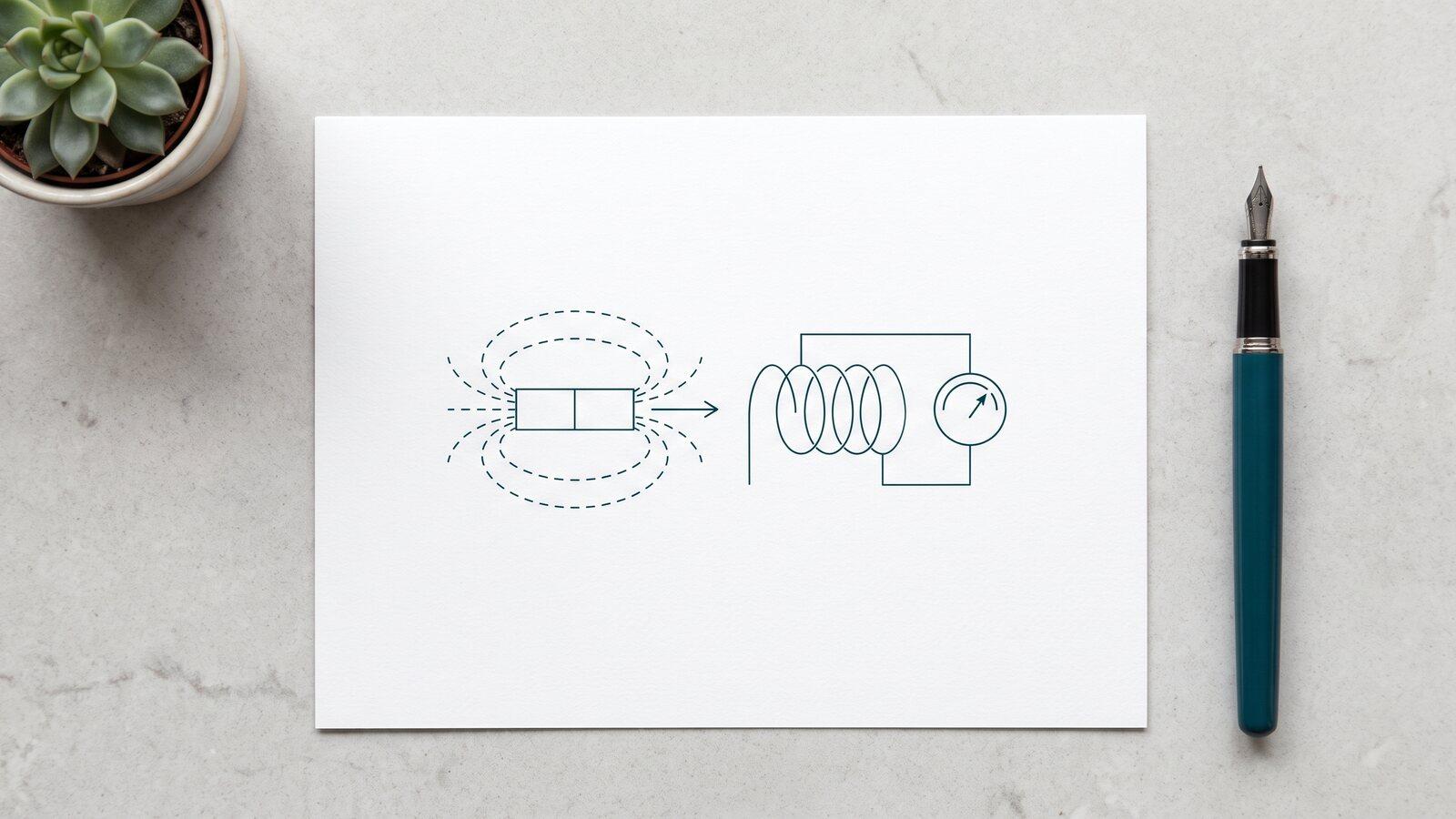
| 電磁現象一 Electromagnetism I | Field lines, electric potential energy and potential, a charge in a uniform field; fields of a long wire, a circular loop and a solenoid; forces on currents and moving charges; Faraday's and Lenz's laws; AC, generators, transformers; electromagnetic waves | Equipotential lines; current balance; electromagnetic waves | Charge & Coulomb's Law, Electric Field, Electric Potential, Magnetic Field of a Current, Magnetic Force, Electromagnetic Induction, AC & Transformers, Electromagnetic Spectrum | How electromagnetic waves are produced |
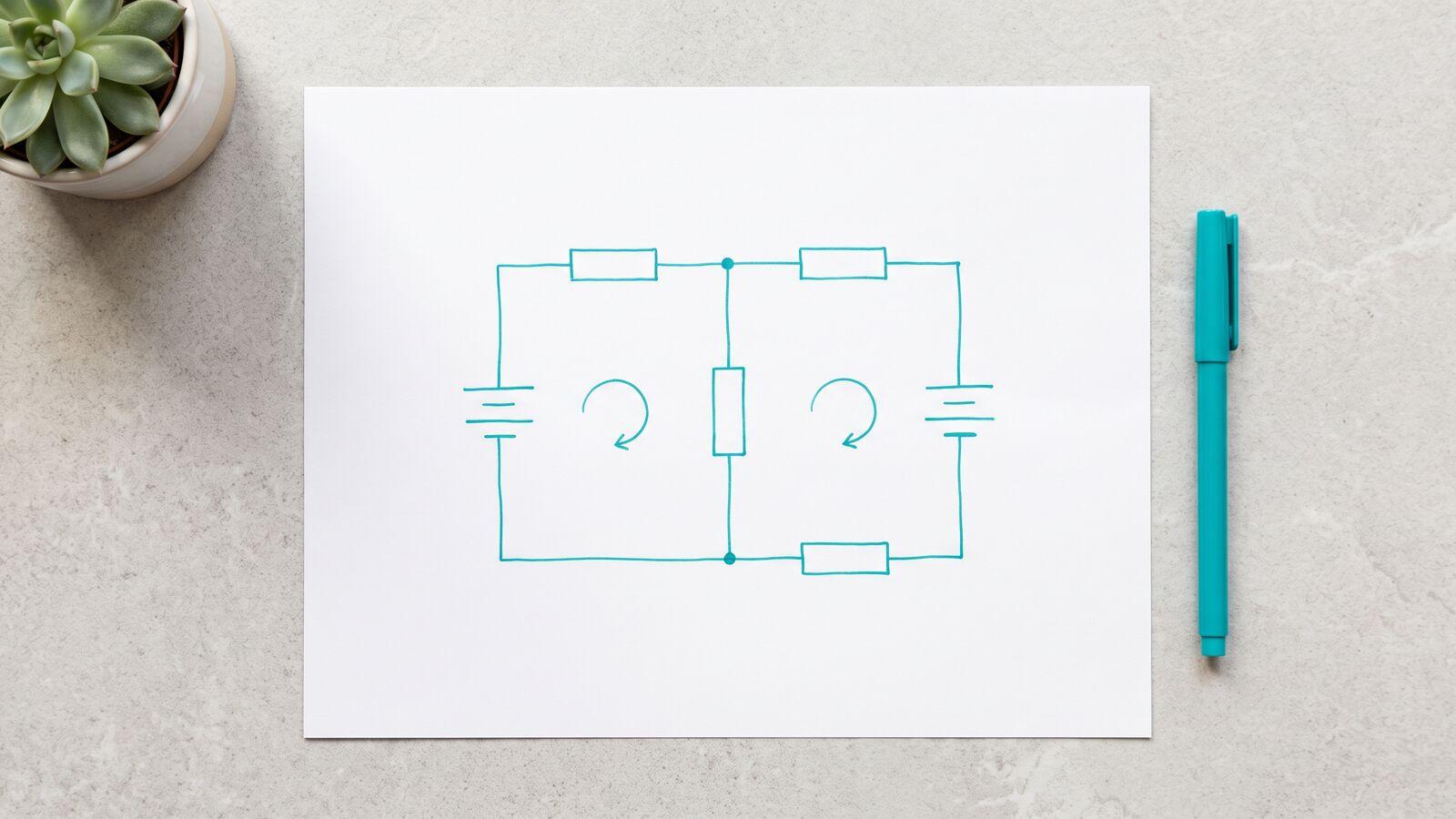
| 電磁現象二與量子現象 Electromagnetism II and Quantum Phenomena | Ohm's law and simple circuits; e/m and Millikan; X-rays; blackbody radiation; photoelectric effect; matter waves; Rutherford and Bohr; nuclei and conservation laws | Ohm's law and circuits; e/m of the electron | Ohm's Law & Resistance, Series & Parallel, Electrical Power, Kirchhoff's Rules, Photons & Photoelectric Effect, Matter Waves & X-rays, Energy Levels, Radioactive Decay, Mass-Energy | Nothing at item level; the qualitative parts stay qualitative |
Two things follow from the table. First, the electricity courses are large: Electromagnetism I alone runs from Coulomb's law to electromagnetic waves, so give it the longest block. Second, the experiments are examinable. A lab item asks what an instrument is for, which variable was changed, or what a data table shows, and no problem generator rehearses that. Work through the experiments in your lab notebook as well as on paper.
What the Physics Zen Path Contains
The AST Physics path has 49 skills, grouped by course as in the table above, with already set. Each skill generates fresh values on every attempt, checks the answer instantly, opens a worked solution after you try, and keeps the theory for that skill one tap away.
At the middle and upper difficulty levels, twenty original exam-style items are mixed into the skills they belong to. Half of them answer with five options, as the paper's single-choice items do, and six with four. The other four are written-answer items in the manner of Part 2: from the Thomson e/m experiment, speed from crossed fields and then the charge-to-mass ratio from the circle; the charge on a balanced Millikan drop as a whole number of ; the closest approach of an alpha particle to a nucleus; Wien's law. Others cover Bohr orbits, where the radius grows as and the speed falls as , thin films, reflection at fixed and free ends, the mass spectrometer, a rod sliding on rails in a magnetic field with Lenz's law, and Kepler's second and third laws.
What the path does not do matters as much:
- No multiple-select items. Every item has one correct answer. Train the option-by-option judgement on official papers.
- No graded derivations or drawn graphs. Written answers are checked as numbers; the reasoning you write on Part 2 is yours to practise.
- Limited figure reading. Velocity-time graphs, wave snapshots, I-V graphs and circuits appear; the long, figure-led contexts of the real paper do not.
- Content gaps. Pulse superposition, Huygens' principle, how electromagnetic waves are produced, and measurement uncertainty are not drilled. Fluids, capacitors and the moment of inertia are not on the path.
The path is Premium. Kinematics is free in full, so you can see how a skill works before deciding.
And the GSAT (學測) Physics?
The GSAT science paper (自然) examines the required courses of physics, chemistry, biology and earth science, including 探究與實作, with the four subjects in roughly equal shares. It lasts 110 minutes. In the January 2027 sitting it is on Friday, January 22, from 12:50 to 14:40.
The AST range contains the required physics course, so the path covers GSAT physics content as well. The format is a poorer fit. GSAT physics items are mostly short conceptual questions in real-world contexts, many of them multiple-select, while the path asks for numbers. By our own item-by-item count, the path drills about three quarters of the required-physics content, and the conceptual items it cannot pose are the rest. If the GSAT is your only physics exam, use the path for the calculations and official GSAT papers for everything else.
A 16-Week Plan to July
Start the plan sixteen weeks before July 10, 2027, which is the third week of March. If you start earlier, stretch the course blocks rather than adding mock papers.
Week 0: one official paper, cold. Eighty minutes, no calculator. Mark it with the official key and the multiple-select rule, then sort every lost point by course and by cause.
Weeks 1 to 3: Mechanics I. Twelve skills. Projectiles and circular motion are where vector thinking starts; gravitation with Kepler's laws closes the block.
Weeks 4 to 6: Mechanics II and Thermal Physics. Thirteen skills. Momentum and collisions first, then torque and equilibrium, then energy, then the gas laws. Check each collision answer twice: conserved momentum, and kinetic energy if the collision is elastic.
Weeks 7 and 8: Waves, Light and Sound. Seven skills. Keep closed and open air columns apart, and keep the double slit apart from the single slit.
Weeks 9 to 11: Electromagnetism I. Eight skills and the longest block. Before every induction problem, say in words what flux is changing and which way the current must flow to oppose it; that sentence is half of most Lenz items.
Weeks 12 and 13: Electromagnetism II and Quantum Phenomena. Nine skills. The modern-physics experiments are named in the learning content one by one, so learn each by its setup, what it measured, and the one equation it rests on.
Weeks 14 to 16: full papers. One timed paper a week, marked strictly. Between papers, go back to the path only for the skills those papers exposed.
Daily, keep sessions short and mixed: twenty minutes on the path is enough to keep earlier blocks from fading while a new one is built.
Conventions That Matter
Use , the value the path is set to. With no calculator allowed, a calculation that is heading for an ugly decimal is a reason to check the setup before grinding through the arithmetic. Keep units in every line, especially eV against joules in the quantum course and nanometres against metres in optics: an answer converted wrongly looks exactly like a physics mistake.
For the mathematics side of the same exam year, Math Zen has a companion guide to GSAT math. If the problem is how you study rather than what, start with how to study physics effectively, and for the longest block of the plan, read electromagnetic induction and the Magnetism & Induction skills before week 9.
Common questions
- When is the 2027 AST Physics exam?
- The 116 學年度 分科測驗 runs on July 10 and 11, 2027. Physics is the first session on Saturday, July 10, from 08:40 to 10:00. Registration is open from June 3 to June 15, 2027, and score reports are mailed on July 29, 2027, according to the 116 exam regulations published by the CEEC (大考中心).
- What is the format of the AST Physics paper?
- Eighty minutes and 100 points. Part 1 is single-choice and multiple-select questions worth about 70 points in total; Part 2 is mixed question sets and written-answer questions worth about 30 points. The range is the required physics course, the five advanced elective courses, their experiments, and the junior-high prerequisites.
- How are multiple-select questions scored?
- Each option is judged on its own. With n options and k of them wrong, you earn (n − 2k)/n of the item's points; a negative result, or leaving every option blank, scores zero. On a five-option item, one wrong option leaves three fifths of the points and two wrong options leave one fifth.
- Can I use a calculator on the AST?
- No. Calculators are on the CEEC list of items you may not bring to your seat, along with phones and any device that can calculate, store or transmit. Train every calculation by hand, including powers of ten and square roots of simple numbers.
- Does the Physics Zen path also cover the GSAT (學測) physics?
- It covers the content of the required physics course that the GSAT science paper examines, because the AST range contains it. The format fits less well: GSAT physics items are mostly short conceptual questions, often multiple-select, and the path drills numeric problems. Use official GSAT papers for that style.
- Is Physics Zen official AST material?
- No. Physics Zen is independent exam-style practice and is not affiliated with the CEEC (大考中心). Its problems are generated by the app; none are past papers.