How to Prepare for the Bac Physique: The Spécialité Physics Path
The Terminale spécialité physique-chimie is one subject with two halves. The programme and its accompanying resources published by éduscol are organised around four themes: "Constitution et transformations de la matière", "Mouvement et interactions", "L'énergie : conversions et transferts", and "Ondes et signaux". The first of those is chemistry. The other three are physics.
The written spécialité paper is sat in March of Terminale, before the rest of the baccalauréat, and it examines both halves. Separately there is the ECE, the évaluation des compétences expérimentales, whose organisation for each session is fixed by a note de service and whose situations are published in a banque de sujets.
Physics Zen's Bac path trains the physics themes only, as 34 skills. It is independent exam-style practice, not official material, and not affiliated with the ministère de l'Éducation nationale or any académie.
What the Exam Looks Like
Three features of the spécialité paper are worth planning around, and none of them are about the number of exercises.
It is a paper about modelling, not recall. The programme is written in capacités exigibles, verbs you must be able to perform: establish an equation, exploit a graph, justify a choice of model, evaluate an order of magnitude. A student who has memorised formulas but cannot say which situation the formula belongs to is not prepared for this format.
Measurement and uncertainty are part of the subject. éduscol publishes a transversal resource on mesure et incertitudes used from seconde through Terminale. Questions that ask whether a result is compatible with a reference value are not an add-on to physics here, they are physics.
There are numerical skills too. The programme carries capacités numériques, worked through Python, and éduscol publishes sheets covering every one of them for Terminale: parabolic trajectories, the loi des aires, sums of sinusoids, Euler's method for a capacitor charge or for thermal exchange. The path does not teach Python. Knowing the physics of those sheets makes them far less intimidating.
Add the ECE on top and it is clear what independent problem practice can and cannot do. It cannot run an experiment, write your protocol, or judge your uncertainty. It can make sure that the calculation underneath is fast, correct and automatic, so that your attention on the day goes to the reasoning. That division of labour is worth stating, because it is where revision plans usually go wrong. Time spent in the exam re-deriving a capacitor discharge from scratch is time not spent on the question that asked you to justify a model.
What the Physics Zen Path Contains
Thirty-four skills in seven units, ordered by teaching sequence rather than by the programme's theme numbering.
Motion and interactions (9 skills). Kinematics end to end, Newton's laws and friction from Dynamics, and uniform circular motion, centripetal force and gravitation from Circular Motion & Gravitation. This maps onto Mouvement et interactions, including the orbital work that theme is known for.
Energy (4 skills). Work, kinetic and potential energy, conservation and power, from Work & Energy. This is L'énergie : conversions et transferts in its calculating form.
Fluids (2 skills). Density and pressure, and continuity and flow, from Fluids.
Electricity and RC circuits (7 skills). Charge and Coulomb's law, electric field and electric potential from Electrostatics; Ohm's law and electrical power from Circuits; capacitor charge and energy and the RC transient from Capacitors & RC Circuits. The charge and discharge of a capacitor is the standard Terminale differential-equation situation, and having done it forty times with different numbers changes how it reads.
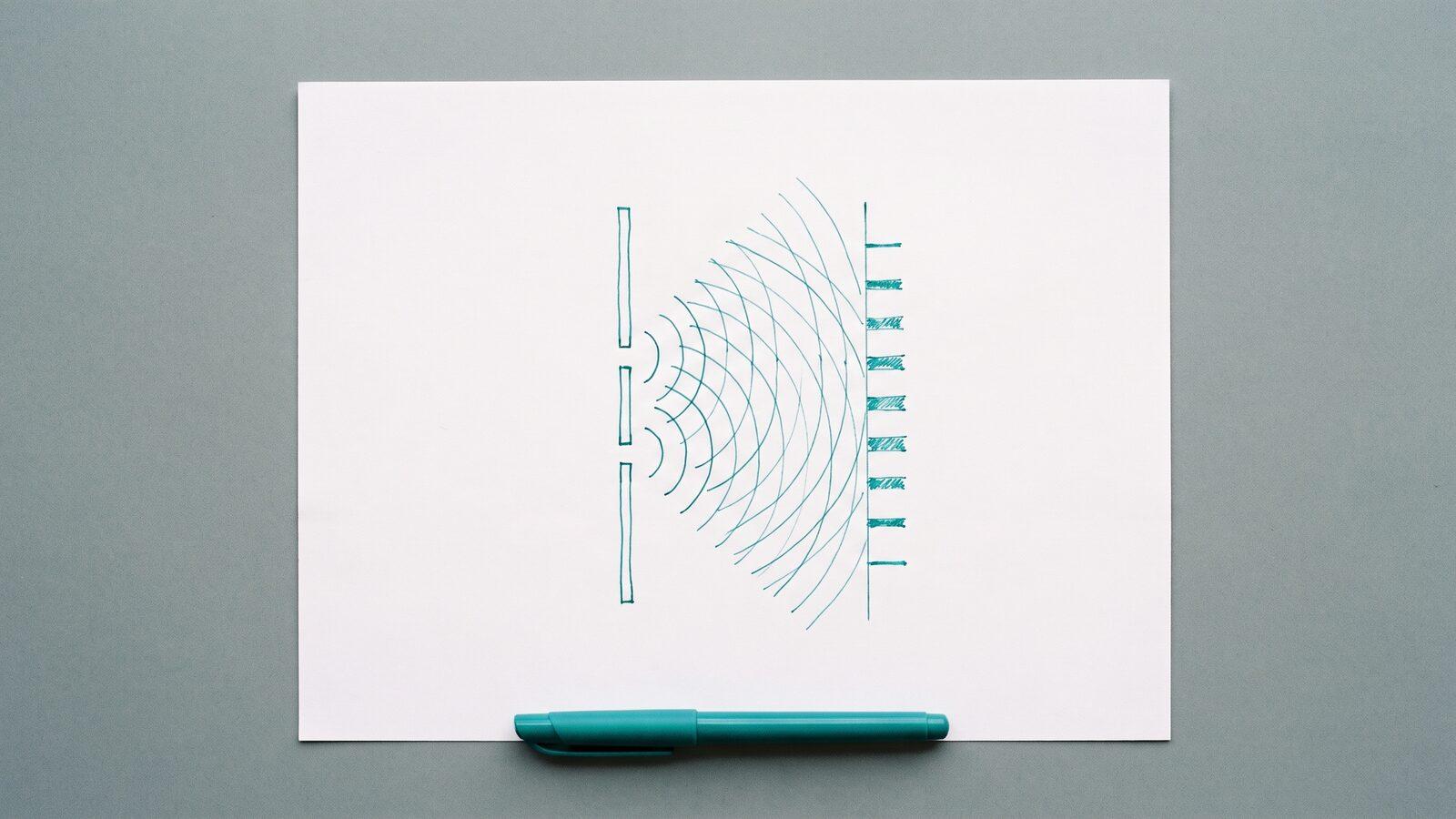
Waves and optics (6 skills). Wave basics and sound from Waves & Sound, refraction and thin lenses from Optics, and interference and diffraction from Wave Optics. This is Ondes et signaux.
Thermodynamics (3 skills). Specific heat and gas laws from Heat & Temperature, and the first law from Laws of Thermodynamics.
Quantum and nuclear physics (3 skills). Photon energy and atomic transitions from Quantum Physics, and radioactive decay from Nuclear Physics.
Inside a skill the values are generated fresh on every attempt, so repeating a skill repeats the method rather than the answer. Checking is instant. A full worked solution opens once you have attempted the item, and the theory for that skill, diagrams included, sits on the same screen rather than behind a menu. Five mastery levels per skill decide when you are finished with it. The path is Premium, with a free first lesson so you can see the format before paying, and the app runs on iPhone and Android.
What the path leaves out is stated plainly: all chemistry, the ECE, and document-based questions. It is focused practice on the physics calculations, not a mock subject.
Twelve Weeks with the Path
Twelve weeks of steady work alongside lessons covers the path without cramming. The howto above is the same plan in short form.
Weeks 1 to 3: motion and interactions. Nine skills. Projectiles and circular motion take the most repetition, and gravitation is where a great many Terminale answers quietly go wrong by one power of ten.
Weeks 4 and 5: energy. Four skills, two weeks, because conservation with friction is worth more attempts than it looks. Name the system before you write the energy balance.
Week 6: fluids. Two skills. Short, and a genuine week of rest in the middle of the plan.
Weeks 7 to 9: electricity and RC circuits. The heaviest unit. Build up: field and potential first, then Ohm and power, then the capacitor, then the transient. When the time constant stops being a symbol and starts being a duration you can estimate, this unit is done.
Weeks 10 and 11: waves and optics. Wave speed and sound, then refraction and lenses, then interference and diffraction. Diffraction and interference use similar-looking relations for different situations, so make yourself say which one applies before writing it.
Week 12: thermodynamics, quantum and nuclear. Six skills in one week is tight but they are individually small. Keep temperatures in kelvin, and treat half-life carefully rather than by analogy.
Between sessions, keep writing full solutions on paper in French, with justification sentences. The app checks answers. The examiner reads reasoning.
Conventions That Matter
The path uses . That is the same value as the A-Level and Abitur paths in this app and different from AP Physics 1, which uses .
Decimals are typed with a point. Your copie will say and the answer field wants . It is a two-second habit that otherwise produces an hour of confusing wrong answers.
Temperatures in gas-law and first-law items go in kelvin. Prefixes matter: microfarads, kilojoules, megabecquerels and electronvolts all appear, and an unconverted prefix reads on a script exactly like not understanding the physics.
And the Bac habit worth keeping from the start: state the model before the number. Which law, which system, which assumption. Instant checking tells you whether the number is right; only you can tell whether the reasoning was.
Bac or AP?
The two paths in this app are not near-substitutes. AP Physics 1 is 26 mechanics skills for the current eight-unit American course: no electricity, no waves, no heat, no modern physics, and . The Bac path keeps most of that mechanics, drops momentum and rotation, and then adds RC circuits, waves and optics, thermodynamics, and quantum and nuclear physics.
If you are sitting AP Physics 1, practising RC transients is practising the wrong exam, and the AP study plan is the guide you want. If you are sitting the spécialité, the Bac path is the one that matches the programme, and the A-Level path is the nearest thing in the app if you also want momentum, rotation and the rest of the curriculum on top.
For the other spécialité most of these students are carrying, Math Zen has a companion guide for the maths side. And if what needs fixing is the way you revise rather than what you revise, read how to study physics effectively before opening the path.
Common questions
- What does the Physics Zen Bac path cover?
- Thirty-four skills in seven units: motion and interactions, energy, fluids, electricity and RC circuits, waves and optics, thermodynamics, and quantum and nuclear physics. These are the physics themes of the Terminale spécialité physique-chimie programme.
- Does the path include the chemistry half of the spécialité?
- No. Constitution et transformations de la matière is chemistry and is not on this path. The spécialité paper examines both halves, so the path is one part of your revision, not all of it.
- Does it prepare the ECE?
- Not directly. The practical assessment and document-based questions sit outside the path. What it trains is the calculation and modelling behind them, so the numbers stop being the hard part.
- Is Physics Zen official Bac material?
- No. Physics Zen is an independent practice tool and is not affiliated with the ministère de l'Éducation nationale or any académie. The problems are not past subjects and not ECE situations.
- Which value of g does the Bac path use, and is the path free?
- g = 9.81 m/s². The path is Premium, with a free first lesson so you can see the format first, and the Kinematics topic is free end to end. Physics Zen runs on iPhone and Android.